
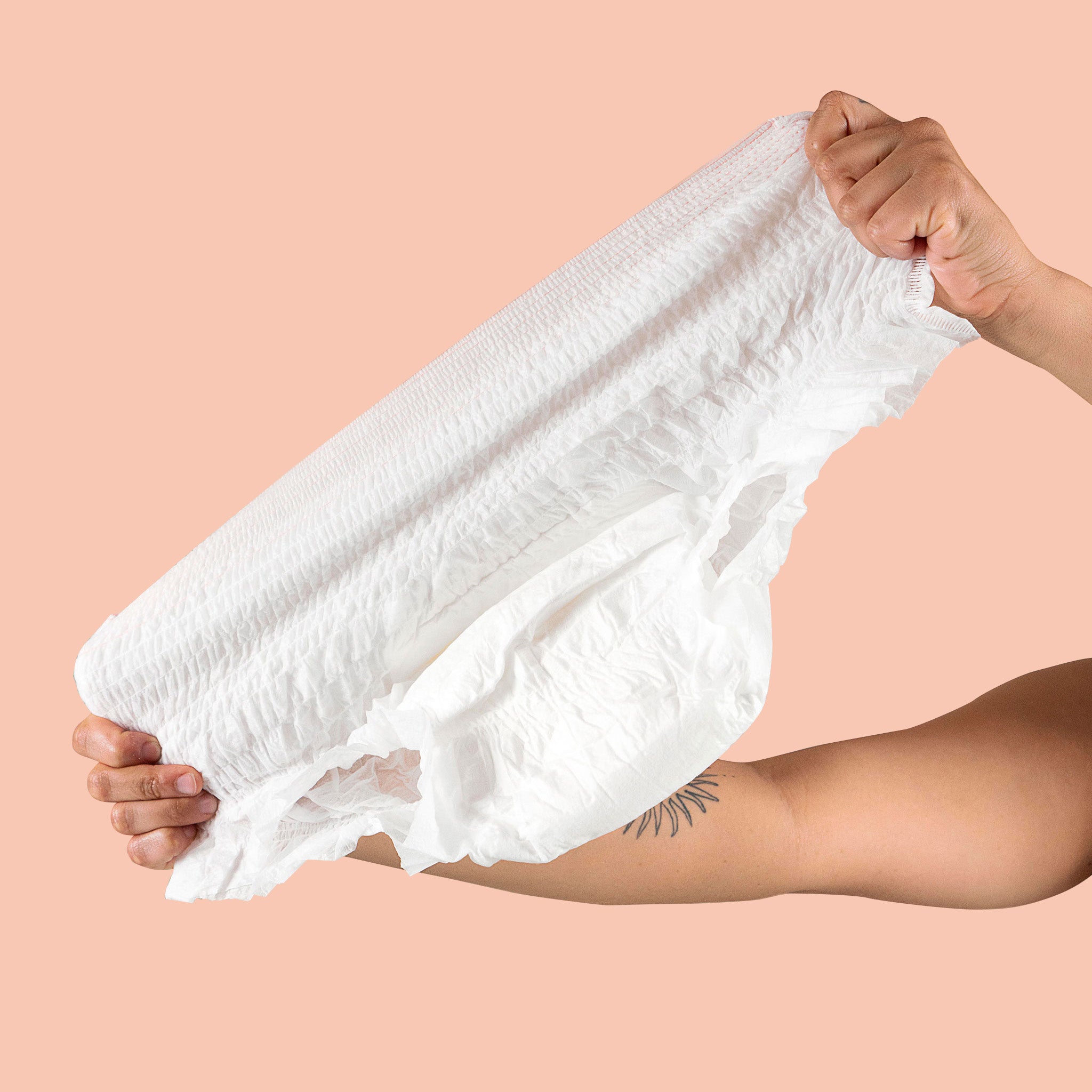


Pads
Rael's organic cotton pads are absorbent strips that attach to the inside of your underwear with an adhesive backing. They sit outside the body and collect menstrual flow after it leaves the vagina. Their main strength is simplicity, no insertion, no learning curve, and you can check and change them easily throughout the day.
Most people starting their period reach for pads first, and that makes sense. The relief of having something familiar and visible is real, especially in those early cycles when flow is unpredictable.
Tampons
Tampons are small cylinders of compressed absorbent material inserted into the vaginal canal to absorb flow internally. They come with or without an applicator. Once inserted correctly, you typically forget you're wearing one, which makes them a practical choice for swimming, sports, and warmer weather.
Key Differences Between Pads and Tampons
|
Feature |
Pads |
Tampons |
|---|---|---|
|
Placement |
External (in underwear) |
Internal (inserted into vagina) |
|
Ease of first use |
Very easy |
Requires practice |
|
Activity suitability |
Limited (no swimming) |
High (including swimming) |
|
Flow options |
Available in different lengths and absorbencies |
Available in different absorbencies |
|
Comfort during sleep |
Works well |
Follow product use instructions |
|
Sensation when worn |
Can feel bulky |
Minimal if inserted correctly |
One of the biggest practical differences is that tampons can be worn while swimming, while pads aren't designed for use in water. Pads are more forgiving for beginners but can shift or leak during physical activity.
Pads can be an approachable option for anyone new to periods or uncomfortable with internal products, while tampons can be a convenient choice for swimming and other active days.
Strengths and Weaknesses
Pads
Pads are the more accessible option for most beginners. There's nothing to insert, no angle to get right, and you can see exactly what's happening throughout the day, which helps when you're still learning your own flow patterns. They can also be a comfortable option for overnight use if you prefer not to wear a tampon while sleeping.
Materials and construction can also factor into your choice. Rael pads feature a soft, breathable organic cotton cover and Leak Locker Technology for reliable, leak-resistant protection. They're also independently tested and Dermatest approved as safe for sensitive skin.
On the functional side, pads can shift, bunch, or leak at the edges during physical activity. Pads aren't designed to be worn while swimming. That's not a minor inconvenience if you're active or it's July.
Tampons
The freedom organic cotton tampons offer is their clearest advantage.
When inserted correctly, a tampon shouldn't feel uncomfortable and can be worn during activities like swimming, running, and yoga. The learning curve is the main obstacle. Inserting a tampon at the wrong angle can be uncomfortable, and it may take a few tries to find the position that feels right. Rael tampons feature a certified organic cotton core and veil and a BPA-free applicator, with Leak Locker Technology designed to provide up to 8 hours of leak-resistant confidence.
The most common insertion mistake is not going far enough, which can cause discomfort. On the safety side, tampons are associated with Toxic Shock Syndrome (TSS), a rare but serious disease that may cause death. To help reduce the risk, select the minimum absorbency needed to control your menstrual flow. Higher-absorbency tampons have been associated with increased TSS risk. Be sure to read and follow the product's full use and safety instructions. If you choose pads, Rael's pad size guide can help you compare lengths and coverage options to find the right fit for your flow and routine.
The bulk and shifting that pads bring get replaced with a different trade-off: you have to be attentive to proper use and absorbency. Neither product lets you completely forget about your period.
Which One Should You Choose?
If you're new to periods, dealing with a heavier flow day at home, or simply prefer not to use an internal product, pads are the straightforward choice. If you're active, planning to swim, or find external products uncomfortable and you're willing to spend a cycle or two figuring out correct insertion, tampons are worth it.
Using both based on your day is also a perfectly valid strategy. Plenty of people switch between pads and tampons depending on their flow, comfort level, and what they have planned. There's no rule that says you commit to one forever, and if you're also thinking about what goes into the products you use every month, that's a reasonable place to start when choosing a brand.
If you're managing your first few cycles, starting with pads and trying tampons when you feel ready can be a practical way to learn what works best for you.
Think about what you're doing this week, check the absorbency label on whatever you have on hand, and if you're unsure, pick up a variety pack so you can try both without committing to a full box of either.
FAQs
Is it better to use pads or tampons?
Neither is objectively better, it comes down to your body, your lifestyle, and your comfort level. Pads are simpler to use for some people, while tampons can offer more freedom of movement for active days. Both have different use considerations, so the best choice depends on your comfort level, flow, and routine. Most people end up using both depending on the situation.
What are the pros and cons of pads vs tampons?
Pads are easy to use and make it easy to monitor your flow, but they can feel bulky and aren't designed for swimming. Tampons are discreet and activity-friendly but require correct insertion and careful attention to absorbency and product use instructions. Tampons are also associated with TSS, a rare but serious disease, so it's important to follow all safety instructions and use the minimum absorbency needed for your flow.
How do I choose between pads and tampons for my period?
Start with what makes you comfortable, if you're new to periods or prefer something external, pads are the easier starting point. If you're active, swimming, or just find pads uncomfortable, tampons are worth learning to use correctly. Many people use both and choose between them depending on their flow, comfort level, and plans for the day.
Can you swim with a pad or do you need a tampon?
Pads aren't designed to be worn while swimming. If you use period products while swimming, an internal option such as a tampon or menstrual cup is generally better suited for the water.
What should you consider when changing pads vs. tampons?
For tampons, follow the product's use instructions and choose the minimum absorbency needed to control your menstrual flow. Higher-absorbency tampons have been associated with increased TSS risk. Pads can be changed based on your flow, comfort, and coverage needs.
